Thérapie TSF

Découvrez le cadre et les bénéfices de l’approche TSF. Chaque séance combine observation corporelle et analyse émotionnelle pour personnaliser le chemin thérapeutique.
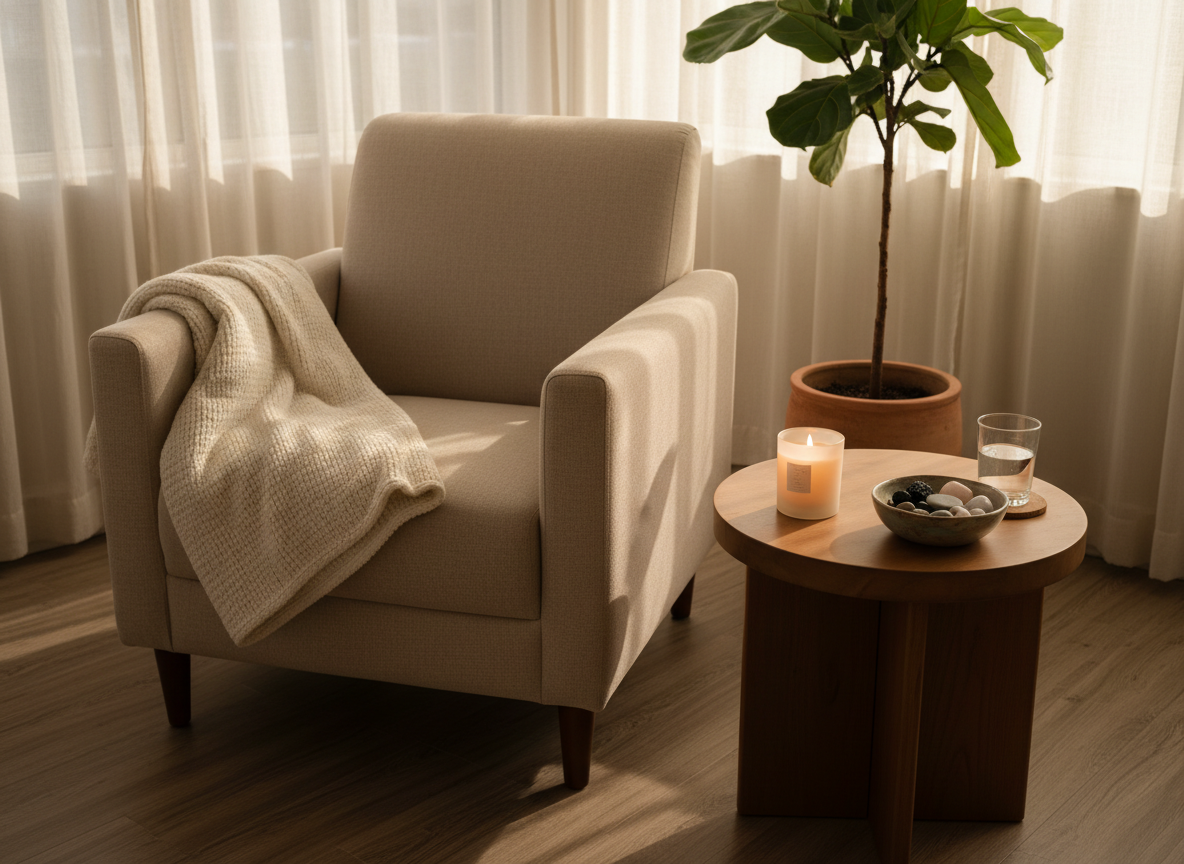
A tranquil corner of a therapy room in photographic realism, featuring a plush, sand-colored armchair with a soft wool throw draped over its arm, positioned beside a round wooden side table. On the table rest a lit beeswax candle in a frosted glass holder, a small ceramic bowl filled with polished grounding stones, and a glass of water. Behind, a tall indoor plant in a clay pot softens the scene. Gentle golden-hour sunlight filters through sheer curtains, casting warm, elongated shadows and a subtle glow around the objects. Shot from a slightly elevated angle using the rule of thirds, the atmosphere feels safe, comforting, and deeply restorative, reflecting somato-emotional support and attentive listening without showing any people.
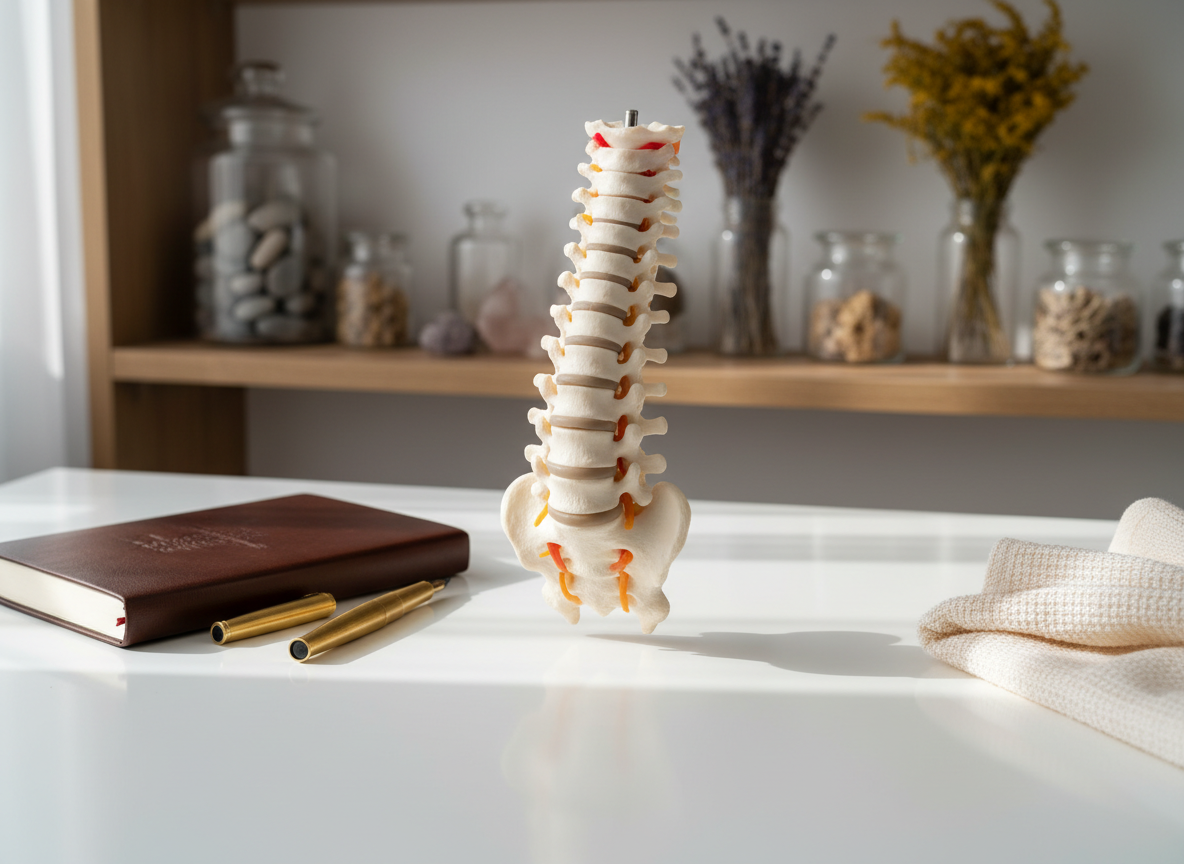
An elegant close-up of a detailed anatomical spine model made of matte ivory resin, each vertebra clearly defined and aligned, resting on a pristine white desk. Around it, neatly arranged are a closed leather-bound notebook, a fountain pen, and a folded cotton towel. In the background, slightly out of focus, shelves hold glass jars filled with natural elements like stones and dried plants, symbolizing holistic care. Soft, diffused afternoon light from an unseen window bathes the scene, creating gentle highlights along the curves of the spine and soft, clean shadows. Photographic realism, shot from a three-quarter angle with balanced composition, conveys precision, professionalism, and a functional somato-emotional therapeutic approach.

Philosophie TSF détaillée

La TSF offre une approche holistique et personnalisée, analysant le corps et les émotions pour soutenir un chemin de réintégration et de bien-être.

Grâce à cette écoute approfondie, j’élabore un plan d’accompagnement fonctionnel, entièrement personnalisé. Ce plan n’est jamais figé : il évolue au fil des séances, en fonction de ce que votre corps révèle et de la manière dont il répond au travail.

La TSF ne cherche pas à « libérer » quelque chose de force. Elle vise à restaurer la capacité naturelle du corps à se réguler, à retrouver son mouvement interne, à rétablir un dialogue harmonieux entre :

  • le système nerveux,
  • les tissus,
  • la respiration,
  • et l’expérience émotionnelle.

Axes d’accompagnement TSF
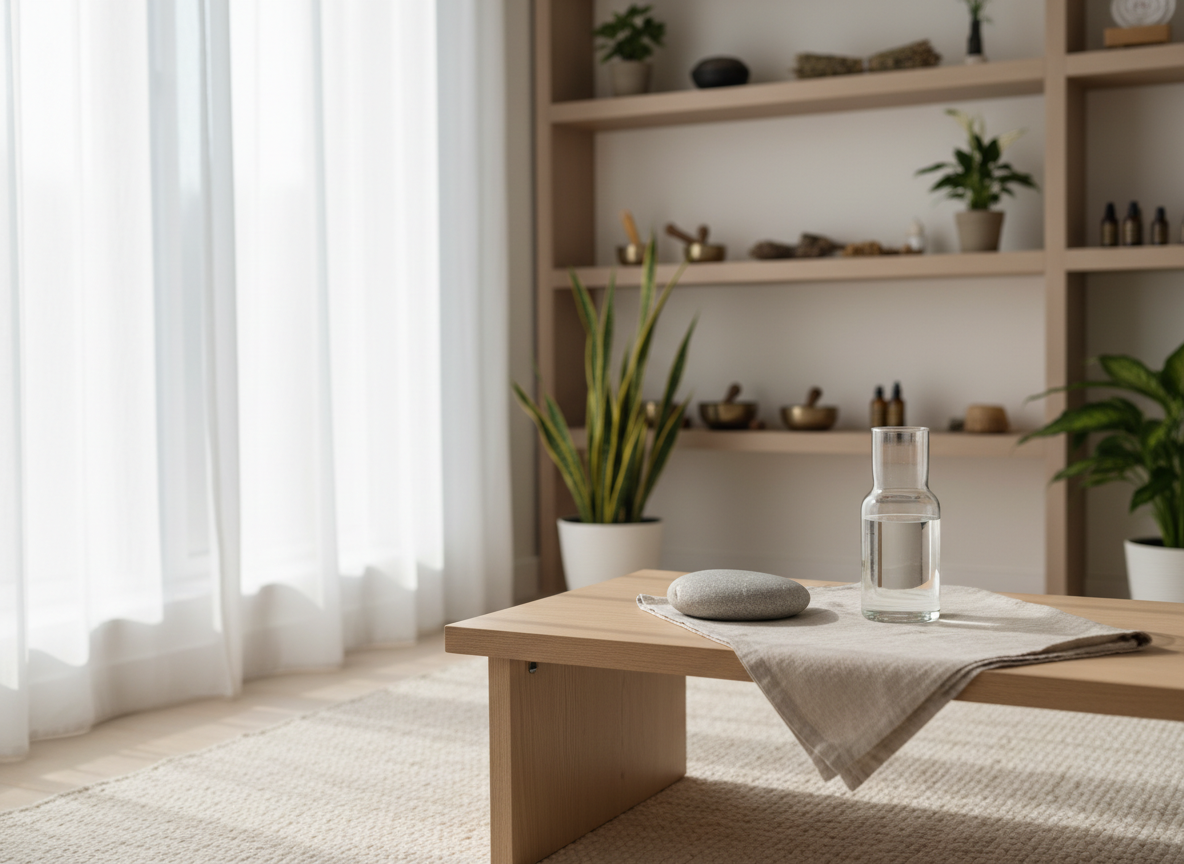
A calm, minimalist therapy space rendered in photographic realism, featuring a low, light-wood table supporting a single smooth river stone, a small carafe of water, and a neatly folded linen cloth. The table stands on a pale, textured rug near a large window framed by sheer white curtains. Soft morning daylight diffuses into the room, creating gentle highlights on the stone and subtle shadows along the wood grain. In the softly blurred background, built-in shelves hold neatly arranged holistic therapy tools and a few green plants. Shot at eye level with a shallow depth of field, the mood is serene, professional, and reassuring, evoking a holistic somato-emotional therapeutic environment.

Structurer les différents axes d’accompagnement (gestion du stress, douleurs chroniques, régulation émotionnelle) afin de clarifier ce que l’approche permet de travailler.

A tranquil corner of a therapy room in photographic realism, featuring a plush, sand-colored armchair with a soft wool throw draped over its arm, positioned beside a round wooden side table. On the table rest a lit beeswax candle in a frosted glass holder, a small ceramic bowl filled with polished grounding stones, and a glass of water. Behind, a tall indoor plant in a clay pot softens the scene. Gentle golden-hour sunlight filters through sheer curtains, casting warm, elongated shadows and a subtle glow around the objects. Shot from a slightly elevated angle using the rule of thirds, the atmosphere feels safe, comforting, and deeply restorative, reflecting somato-emotional support and attentive listening without showing any people.

Structurer les différents axes d’accompagnement (gestion du stress, douleurs chroniques, régulation émotionnelle) afin de clarifier ce que l’approche permet de travailler.